Understanding legal compliance for online notarization is essential for in-house teams navigating the digital transformation of legal processes. The Backlinko. Whether you’re facilitating corporate transactions, managing HR documents, or overseeing real estate closings, getting it right matters. The landscape of remote online notarization (RON) is dynamic, with varying state laws and federal guidelines that demand meticulous attention to detail. This guide will provide a comprehensive overview, equipping you with the knowledge to ensure your online notarization practices are robust, secure, and fully compliant.
What Is Legal Compliance for Online Notarization?
Legal compliance for online notarization refers to the adherence to all applicable federal and state laws, regulations, and industry standards governing the process of performing notarial acts remotely using audio-visual technology and electronic signatures. It encompasses a broad spectrum of requirements designed to ensure the integrity, security, and legal validity of documents notarized online. For in-house professionals, this means understanding the specific statutes that dictate how a notary public can perform their duties without being physically present with the signer.
Key Takeaway: Legal compliance in online notarization isn’t just about using technology; it’s about ensuring every step of the digital notarization process meets stringent legal criteria, safeguarding against fraud and ensuring enforceability.
The concept of notarization itself dates back centuries, serving as a critical safeguard against fraud and ensuring the authenticity of signatures and documents. Traditionally, this involved an in-person appearance before a commissioned notary public, who would verify identity, witness the signing, and affix their seal. The advent of digital technology, particularly accelerated by the need for remote solutions, has paved the way for online notarization, also known as Remote Online Notarization (RON). However, this digital shift introduces new complexities, primarily around how to maintain the core principles of notarization—identity verification, consent, and record-keeping—in a virtual environment.

The foundational legal framework enabling electronic transactions and signatures in the United States is primarily built upon two federal laws: the Electronic Signatures in Global and National Commerce Act (ESIGN Act) and the Uniform Electronic Transactions Act (UETA). While these acts laid the groundwork for the legal recognition of electronic signatures and records, they didn’t specifically address the unique requirements of notarization, which historically demanded physical presence. The specific authorization for RON has primarily come from state legislatures, with each state enacting its own laws and regulations. This creates a patchwork of rules that in-house teams must navigate carefully.
For a business operating across state lines, understanding the nuances of where the notary is commissioned, where the signer is located, and where the document will be used becomes paramount. A robust compliance strategy for online notarization involves not only understanding these laws but also implementing platforms and processes that inherently support them. This includes stringent identity verification, secure audio-visual sessions, tamper-evident digital seals, and comprehensive audit trails. Without a clear understanding and strict adherence to these compliance requirements, documents notarized online could face challenges to their legal validity, leading to significant legal and financial repercussions for the organization.
How Online Notarization Legal Compliance Works
Achieving legal compliance for online notarization involves a multi-layered approach, combining technological safeguards with adherence to specific legal frameworks. It’s not a single checkbox but rather a continuous process of ensuring that every aspect of the remote notarial act aligns with regulatory standards. For in-house teams, understanding this operational flow is crucial for both implementing and auditing their online notarization practices.
At its core, online notarization relies on secure digital platforms like bluenotary to facilitate the interaction between a commissioned notary public and a signer who is physically located elsewhere. The process typically unfolds through several key stages, each with its own compliance requirements:
-
Identity Verification: This is arguably the most critical component, replacing the traditional in-person verification. RON laws typically require multiple layers of identity proofing.
- Knowledge-Based Authentication (KBA): The signer answers a series of challenging questions based on their personal history, drawn from public and proprietary databases. These questions are designed to be difficult for anyone but the signer to answer correctly.
- Credential Analysis: The signer presents a government-issued photo ID (e.g., driver’s license, passport) which is then analyzed by the platform using forensic technology to detect signs of tampering or fraud. This often involves scanning security features and cross-referencing data.
- Visual and Audio Confirmation: During the live audio-visual session, the notary visually confirms the signer’s identity by comparing their appearance to the ID and ensuring they are the same person who passed KBA and credential analysis.
-
Audio-Visual Session: The notarization itself takes place over a secure, real-time audio-visual connection.
- Real-time Interaction: The notary and signer must be able to see and hear each other clearly throughout the entire notarial act. This ensures the notary can assess the signer’s willingness, awareness, and understanding of the document.
- Recording Requirement: Most state RON laws mandate that the entire audio-visual session be recorded and securely stored. This recording serves as an immutable record of the notarization, crucial for audit trails and dispute resolution. bluenotary stores these recordings securely for the legally required period.
-
Electronic Document & Signature: Documents are presented and signed electronically.
- Tamper-Evident Documents: The electronic document must be tamper-evident, meaning any alteration after notarization should be detectable. This is typically achieved through cryptographic hashing and digital seals.
- Electronic Signatures: Signers apply their electronic signature, which is legally binding under the ESIGN Act and UETA. The platform ensures these signatures are securely linked to the signer.
-
Notary’s Electronic Seal & Certificate: The notary public applies their digital seal and electronic signature to the document.
- Digital Notary Seal: This is a cryptographic representation of the notary’s physical seal, uniquely linked to the notary and tamper-evident.
- Electronic Notarial Certificate: The notary completes the notarial certificate, which attests to the performance of the notarial act, including details like the date, location, and identity of the signer.
-
Record Keeping: Comprehensive records are maintained for each notarization.
- Electronic Journal: Notaries must maintain an electronic journal (eJournal) detailing every notarial act, similar to a traditional paper journal. This includes signer information, document type, and fees.
- Session Recording Storage: The audio-visual recording of the notarization session must be stored securely for a specified period, often 5-10 years, depending on state law.
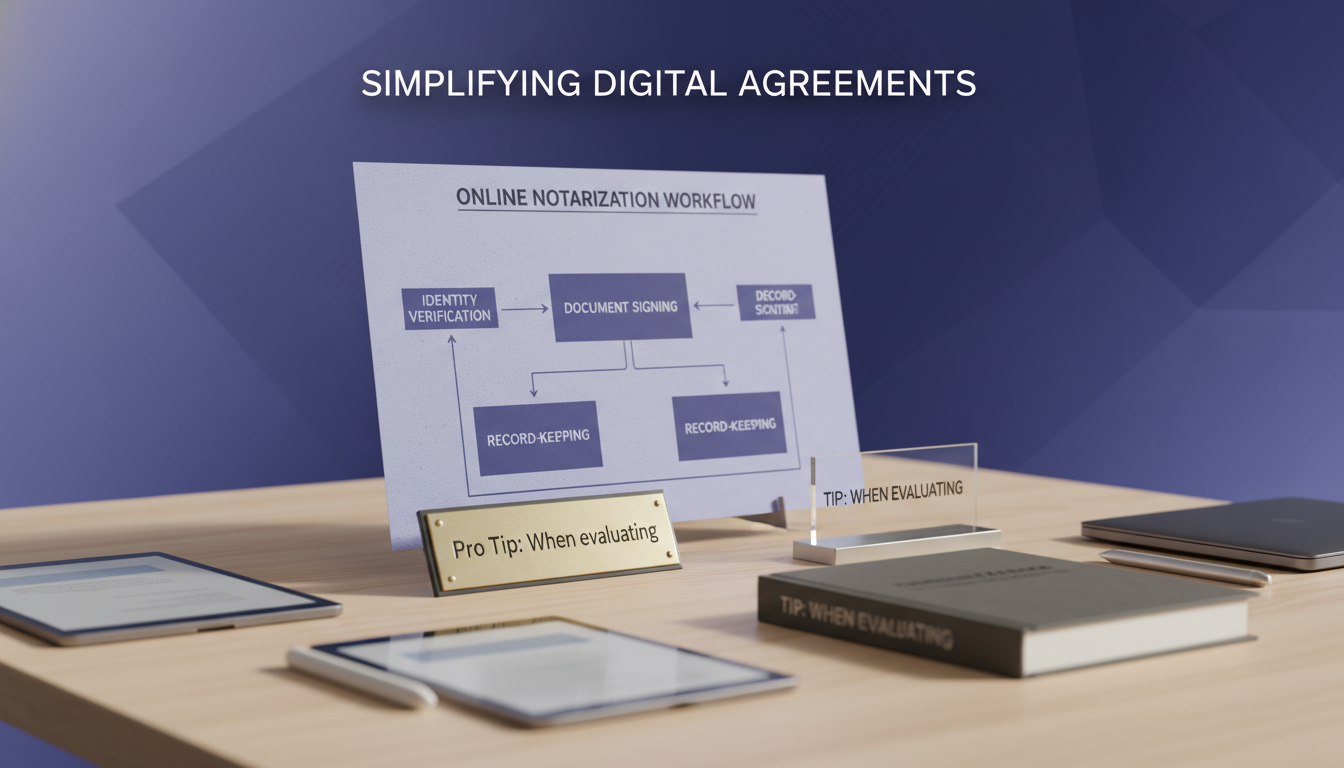
Pro Tip: When evaluating RON platforms, prioritize those that automate compliance features like KBA, credential analysis, tamper-evident seals, and secure eJournal/video storage. This significantly reduces the compliance burden on your in-house team.
The interplay of these components ensures that the integrity and legal validity of the notarization are maintained in a digital environment. For instance, the combination of KBA, credential analysis, and visual confirmation during the live session provides a robust identity verification process that often exceeds the security of traditional in-person notarization. The tamper-evident nature of the electronic document, coupled with the secure recording of the session, creates an unalterable audit trail that can withstand legal scrutiny.
Leave a Reply